
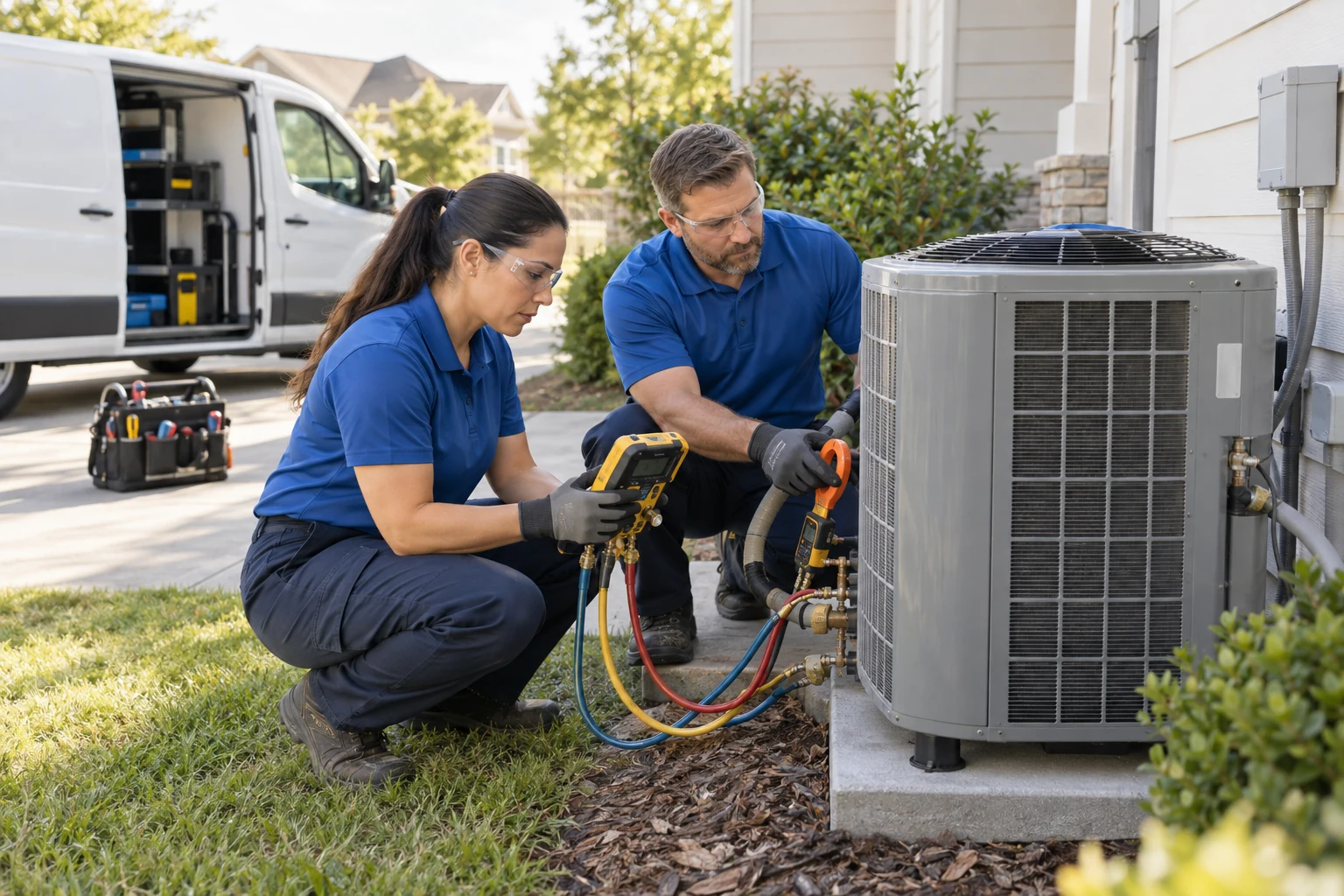
The clearest job record answers three questions: what was there when your crew arrived, what work was authorized, and what changed before the crew left. A few consistent habits make those answers easier to find later.
Before the first tool comes out
Start with the service address, contact, work order, reported problem and the agreed scope. Record access restrictions and anything already damaged or out of service. Capture wide photos for context and close photos of the specific equipment or surface. Keep internal observations separate from what the customer should receive.
While the job is underway
Add notes when a diagnosis changes, a part is unavailable, another contractor affects the schedule or the customer asks for extra work. Tie photos and measurements to the same work order. Get a reviewed change approved before you treat it as part of the original scope. Record who made the decision and when.
At closeout
Write down what was actually done, what was tested, what remains open and the next action. Attach a useful final photo and the equipment identity where relevant. Have the office review sensitive findings before they go into a customer report. A completion record is a timeline of observations; it does not by itself prove the absence of a defect or replace safety procedures.
Make the habit repeatable
Use a small required checklist rather than asking every technician to invent a report. Review a sample of completed jobs each week: can someone who was not on site understand the problem, approval, work and result? Improve the checklist when answers are missing.
Keep the customer, the work and the next action connected.
See CrewTend Photos & Gallery